Noumi keeps your files, rules, and context organized in layers — so it understands what you mean, not just what you typed.
Most AI tools only remember conversations. Noumi remembers the structure around your work — files, preferences, rules, and the decisions that matter.
Noumi keeps track of files, instructions, outputs, and working rules, not just what was said in one thread.
Memory is grouped by the level it belongs to: who you are, what this project is, and what this specific task needs.
When a task starts, Noumi pulls the right context from the right layer without making you retrieve it manually.
Noumi runs on a three-tier memory architecture: global, project, and topic level. Each layer stores a different kind of context, so the system knows what should persist, what should stay local, and what belongs only to one task.
Topics inherit the context of their project, so different tasks can work from the same foundation without repeating setup. At the same time, one project's memory does not automatically spill into another.
Guide: Best long-term memory AI tools →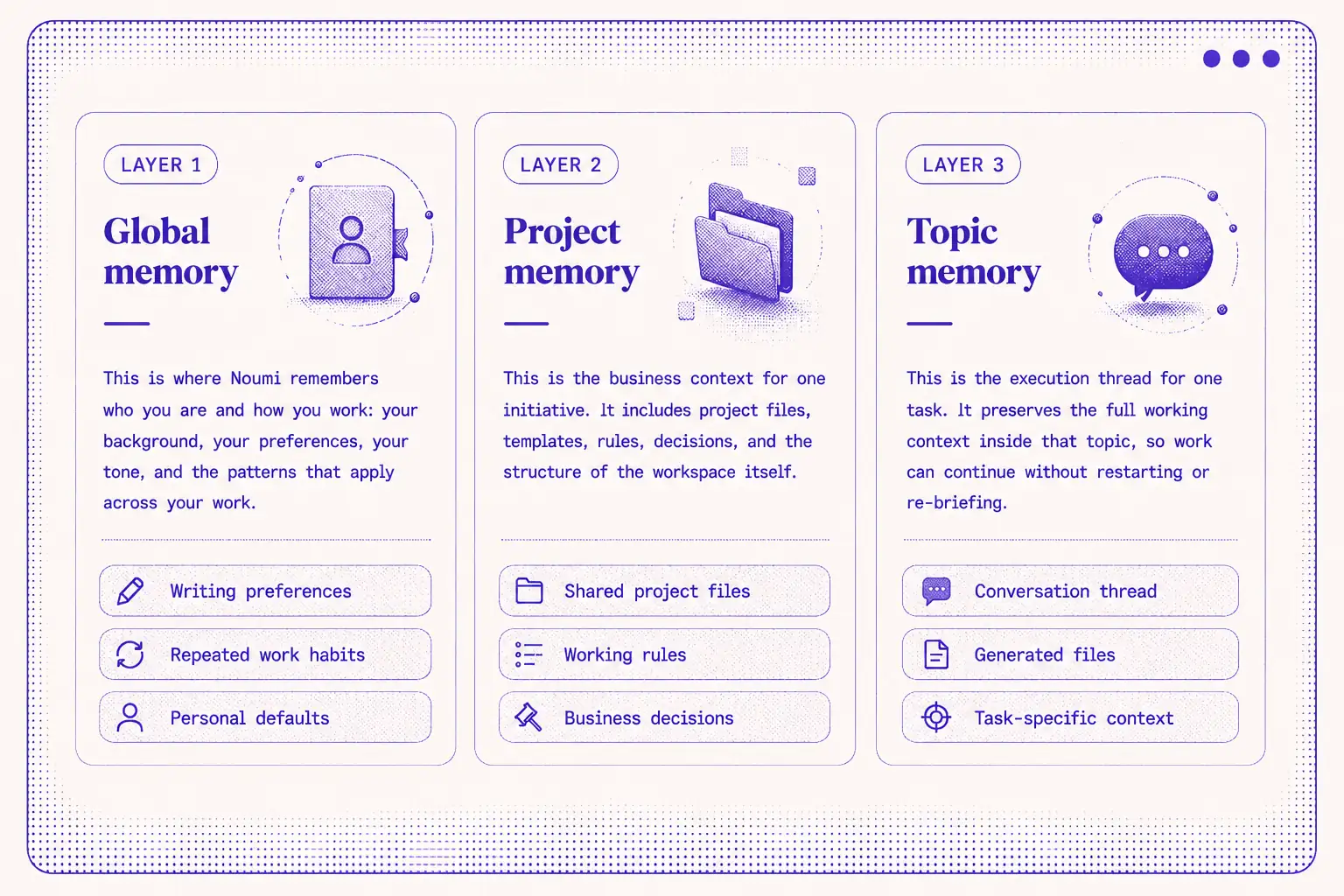
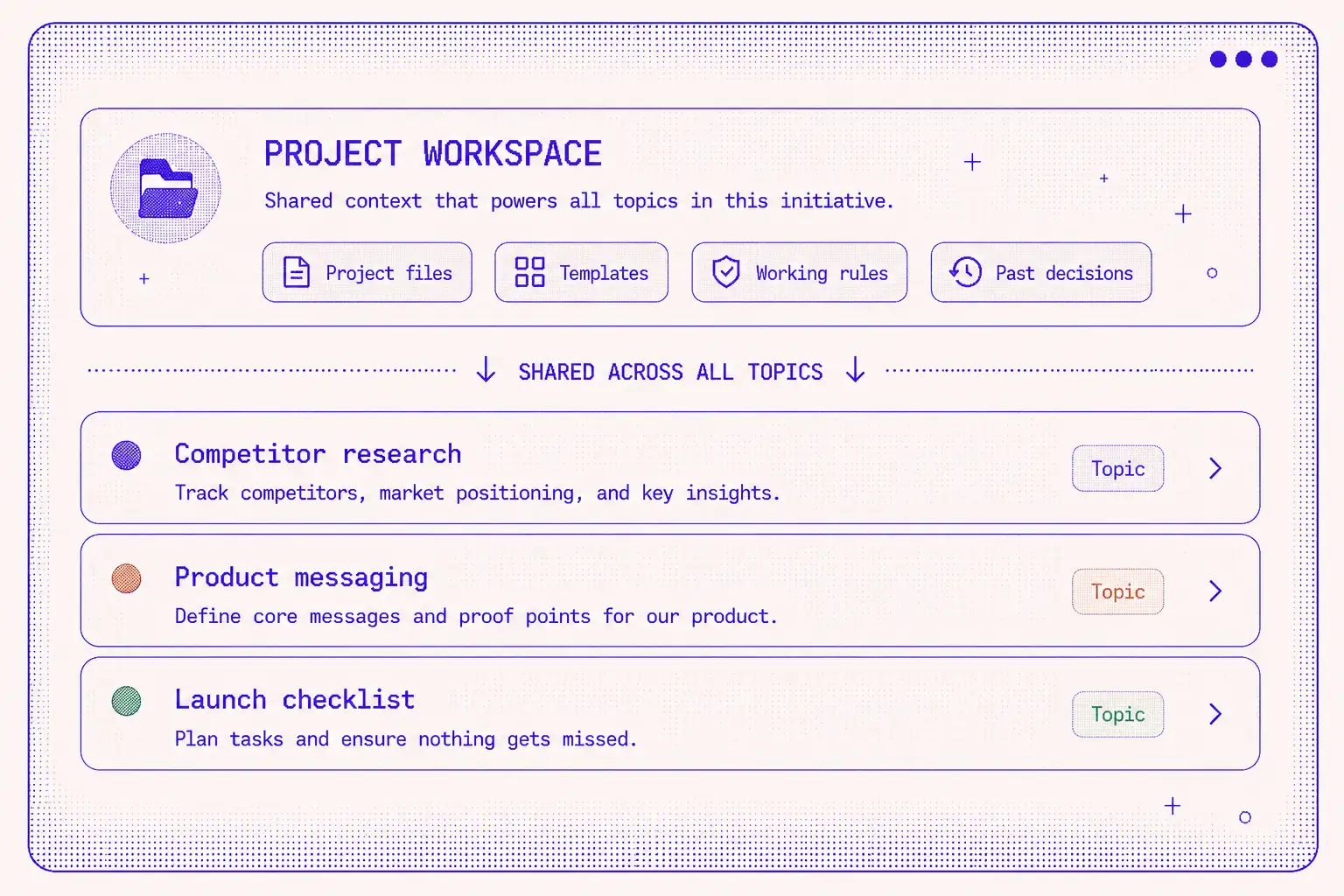
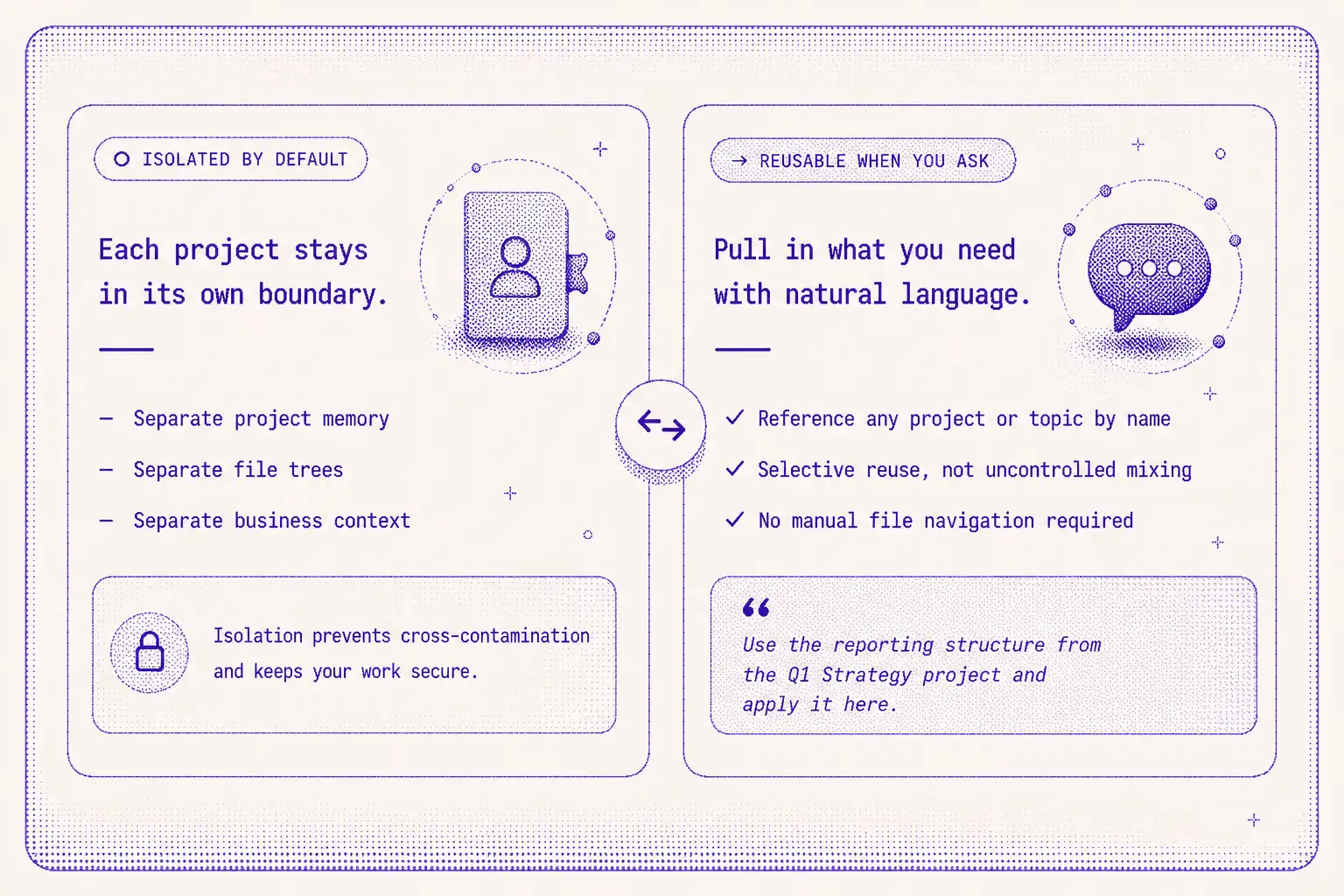
Each project maintains its own memory, file tree, and business context — so client work, internal initiatives, and different workstreams never bleed into each other.
When you need context from another project, just say so. Reference it by name and Noumi selectively pulls in the relevant memory — no manual navigation required.
Files are not separate from context — they are the context. Noumi keeps your workspace structured so memory always knows where to look.
Guide: How to organize files with AI →Keep documents, templates, outputs, and reference materials in one organized system — permanently tied to the project it belongs to.
Noumi reads how you work and proposes a folder structure that makes sense for your project type — not a generic template.
When a workspace grows messy, Noumi scans the files, proposes a cleaner structure, and executes the reorganization — only after you confirm.
Recover previous file states without losing the surrounding task context that produced them — every version is tied to the moment it was made.
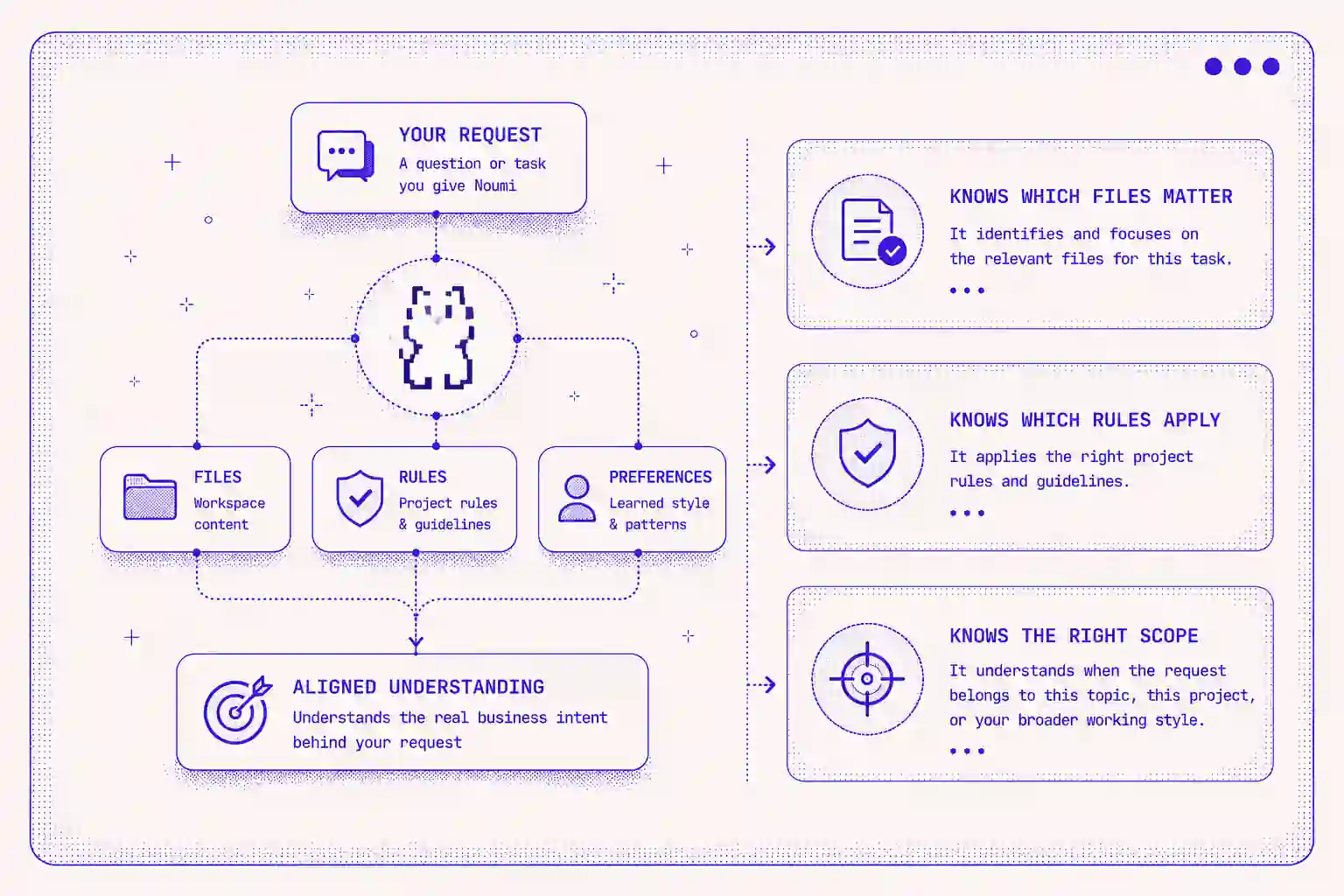
When you give an instruction, Noumi does not interpret it in isolation. It maps what you asked against the files in the workspace, the rules already established in the project, and the preferences it has learned over time.
That is what allows it to understand your real business intent — not just the literal words in one prompt.
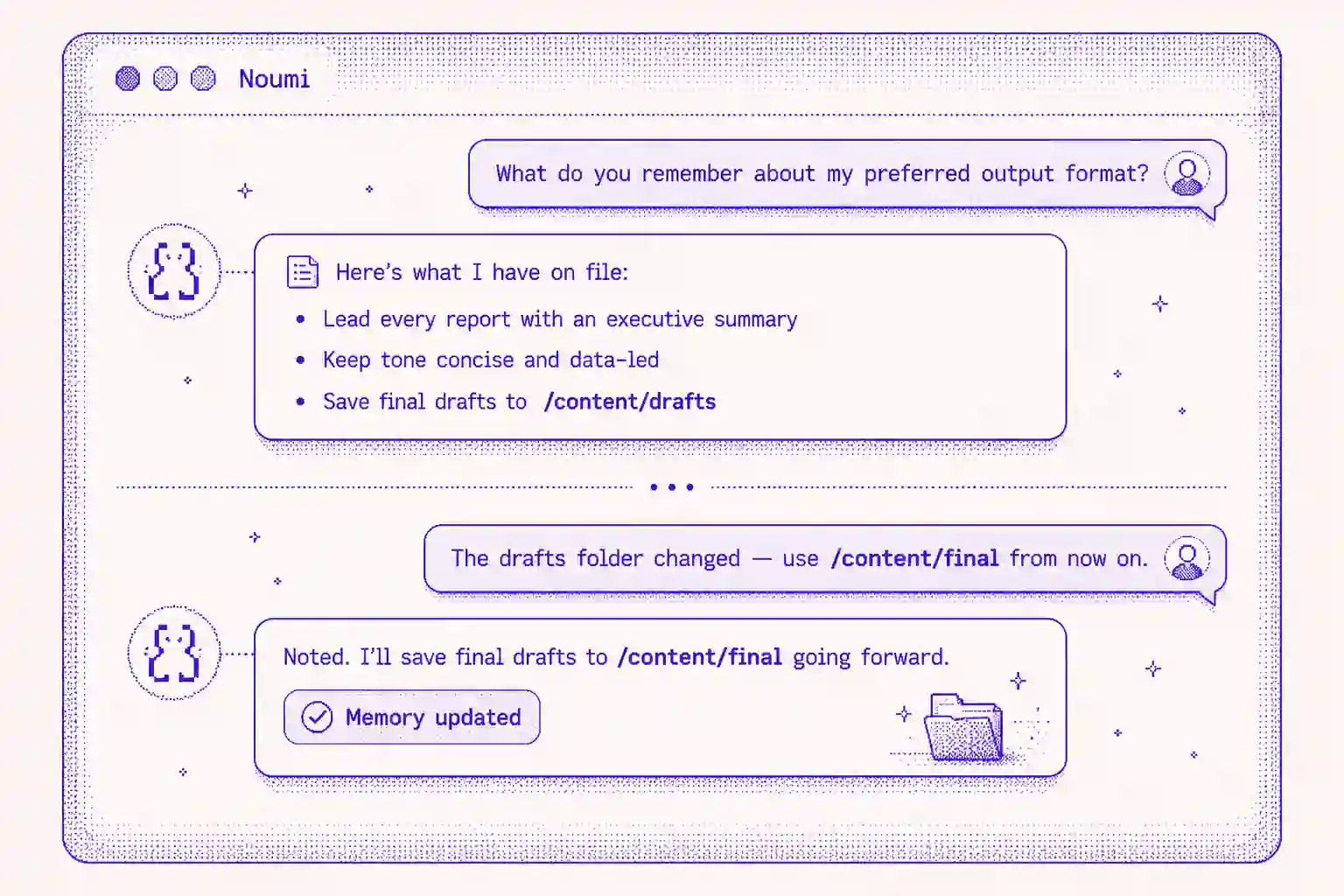
Memory shouldn't be a black box. Just ask Noumi what it remembers about you or your projects — and if anything is off, tell it in plain language to fix it.
Say "What do you remember about my writing style?" and Noumi will show you exactly what it holds.
If something's outdated or wrong, just say so. Noumi updates its memory on the spot.
Common questions about how Noumi's memory system works.
Start with one project. Noumi will remember the rest in the right place.